
Previously, book printing was only economically viable using offset printing, as the high setup and plate costs only paid off with large print runs. Today, digital printing enables high-quality books even for single copies – without printing plates, with short setup times and fully digital workflows. This allows for the economical and flexible realization of small print runs, reprints, and print-on-demand concepts, for example, for niche publications, self-published titles, or limited-edition photo books.
Focus on quality and individuality
Typical small print runs today range from 1 to 100 copies, and in some cases up to 500. In this segment, production is generally on demand, meaning only after an order is placed. This largely eliminates the need for warehousing, as the books go directly to shipping after production.
Since our focus here is on thread sewing (using Smyth machines), our contribution is primarily geared towards the production of a thread-sewn book block – the foundation for a high-quality book with excellent lay-flat properties and long-lasting durability.
Thread sewing is considered one of the most technically demanding steps in bookbinding. However, with Smyth machines, this step can be implemented even for small print runs – down to single copies. This combines traditional craftsmanship with modern digital printing technology – the basis for durable, high-quality books in very small print runs.
What does "small-run book production" mean?
A small print run refers to a deliberately limited number of printed books – typically between 50 and 500 copies. The goal is to produce according to demand, minimize costs, and still achieve a professional final product.
Typical applications include:
- Special publications (e.g., anniversary publications)
- Catalogs or company histories
- Specialized literature with a small target audience
- Artists‘ books, photo books, design objects
- Self-published book projects or first editions
Photo books, in particular, have high demands for durability: Think of the family photo album that is picked up multiple times at Christmas, leafed through from cover to cover, and admired together. A robust binding is crucial here.
Despite the small print run, these books should be of high quality – and remain economically viable to produce.
Why is digital printing suitable for small print runs?
Previously, book production relied almost exclusively on offset printing, which was only cost-effective for large print runs. Today, digital printing enables high quality even for small print runs – without expensive printing plates or lengthy setup times.
Advantages of digital printing for small print runs:
- Low setup costs
- Flexible file processing
- Fast turnaround from a print run of 1
- Good color and image quality
- Personalization possible
This makes digital printing the ideal foundation for professional small print runs – for both brochures and bound books.
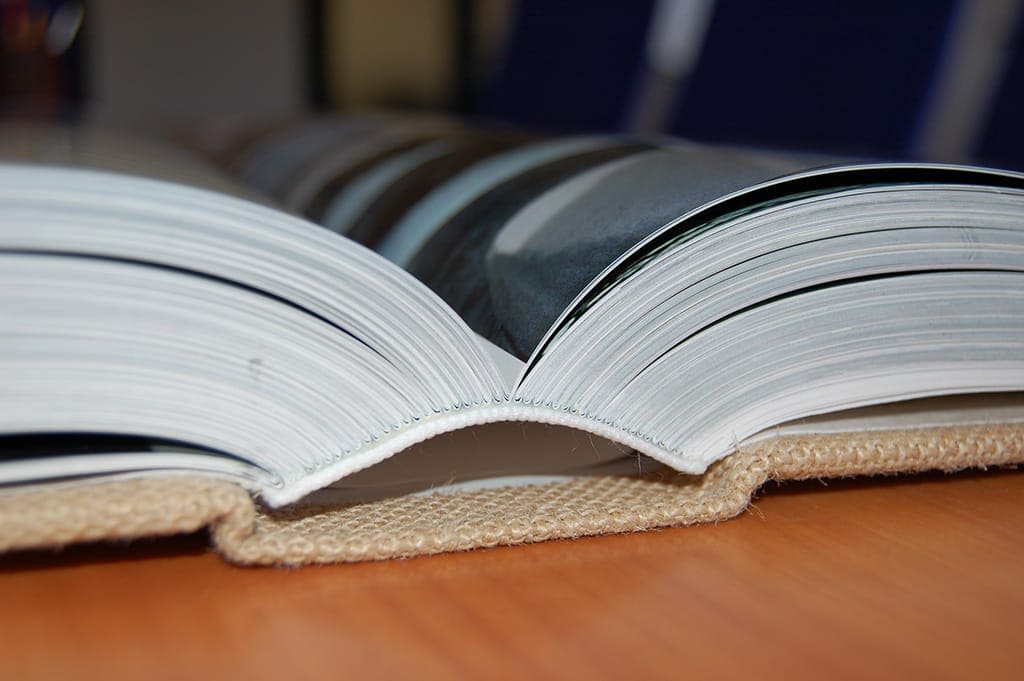
From letterpress to offset to digital printing
Just 40 years ago, small-run book publishers faced a structural problem: Offset printing, then dominant – whether web or sheetfed – was designed for high print runs and was hardly economical for small quantities. The previously widespread traditional letterpress printing (relief printing) was already in decline: Due to its high time and cost expenditure, as well as mechanical stresses that compromised print quality, it became increasingly unattractive.
While initial attempts at digital printing emerged in the mid-1990s, these were more like early experiments. Development was inconsistent throughout the 2000s, as many printing companies and manufacturers remained loyal to the established offset printing process. Acceptance was initially lukewarm, especially in Germany. It wasn’t until around 2012 – not least due to innovations presented at DRUPA – that the final breakthrough was achieved. Since then, digital printing systems have continued to evolve and now convince even the most discerning users.
Modern devices from manufacturers such as Xerox, Canon, HP or Ricoh now deliver print results that are comparable in quality to offset printing.
Cost factor digital printing
The often-cited advantage of attractive unit prices in digital printing is not without controversy. While small print runs are generally cheaper in digital printing than in offset printing, many B2B manufacturers pursue business models where consumables (ink, toner, specialty paper) must be sourced exclusively from the manufacturer. This can impact profitability. Nevertheless, digital printing remains the most economical solution for small print runs – and in many cases, the only way to produce them cost-effectively.
Process of book production in small print runs
Even for small print runs, production follows a classic process that varies depending on the requirements:
- Printing the content (usually digitally)
- Bookbinding: thread stitching or adhesive binding
- Three-sided trimming
- Creating the cover (for hardcovers)
- Inserting and pressing the book block
- Quality control and shipping
The crucial difference: Machine solutions for small print runs must be particularly compact, quick to change over, and flexible – without compromising quality.
Binding methods for small print runs
Thread stitching – high-quality, durable, proven
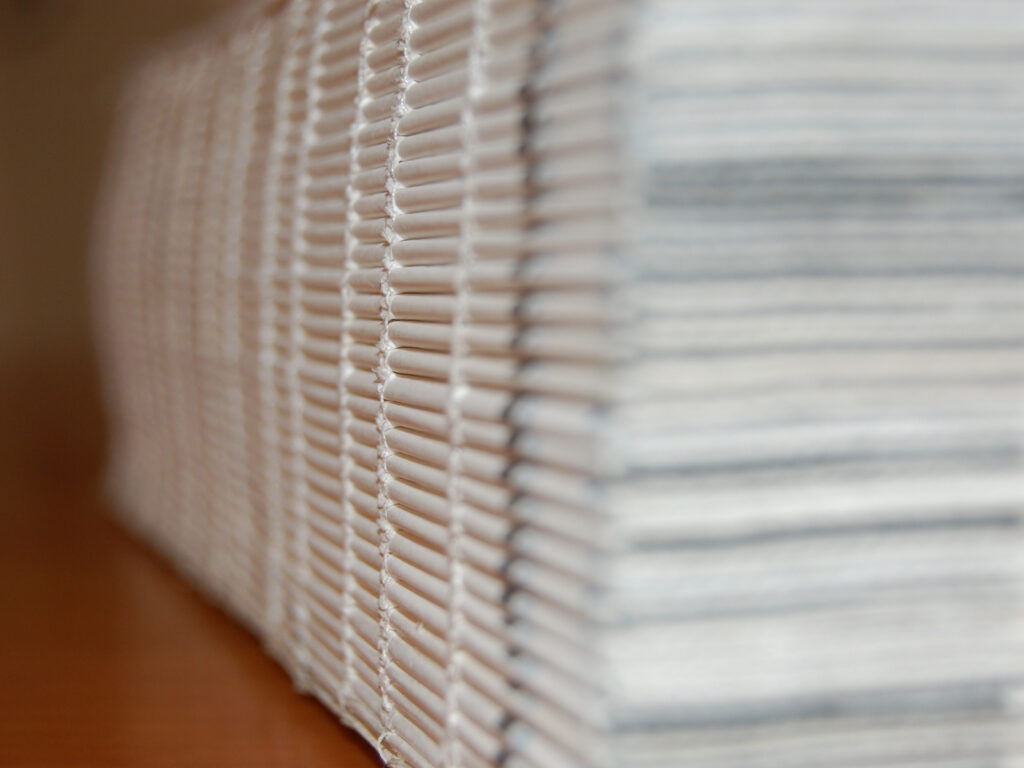
Thread stitching is considered the gold standard of bookbinding. Folded sections are sewn together with thread and bound to form the book block. The result: a sturdy, durable book that opens easily – ideal for content that is frequently used or archived.
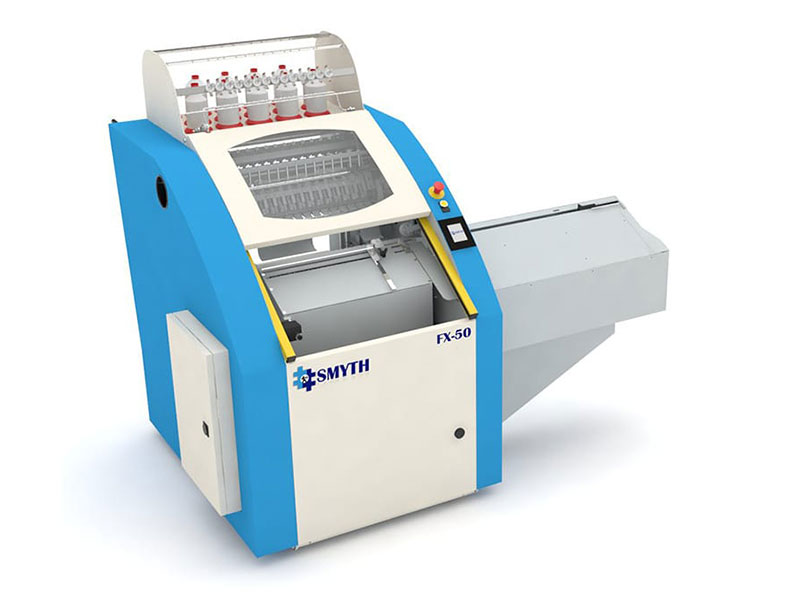
PPL offers Smyth machines optimized for short runs and digital printing:
- Smyth FX-30 – a compact entry-level solution
- Smyth FX-50 – flexible, with a higher degree of automation
- Smyth DX-50 – for higher production demands
Thread stitching truly shines in photo books: it ensures long-lasting durability and optimal lay-flat properties – even with frequent use.
Adhesive binding – flexible and economical
Not every book needs to be thread-bound. For products with a shorter lifespan or less demanding binding requirements, adhesive binding is a suitable option, especially for softcover books.
The Eurobind EB300 offers a compact, high-performance solution, ideal for:
- Training materials
- Brochures
- Simple manuals
- Cost-effective customer publications
Individual consultation on small-run book production
Anyone looking for the right solution for small-run book production will find individual and practical advice at PPL. Whether you’re a publisher, printer, company, or public institution – we work with you to analyze your requirements and identify suitable machine solutions tailored to your production volume and quality standards.
We support you from the initial selection and detailed planning stages right through to commissioning. Upon request, we can organize demonstrations in our showroom, test productions using your materials, or training sessions for your team – practical and focused.
Professionally implement small print runs
Thanks to modern technology, producing high-quality books in small print runs is now economically attractive and possible to a high standard of quality.
With processes such as digital printing, thread stitching with Smyth machines, or perfect binding with the Eurobind EB300, a wide variety of projects can be reliably realized – from artistic photo books to practical softcover brochures.
PPL supports you with experience, technical expertise, and customized solutions – ensuring your small print run is just as high-quality as a large-scale production.