
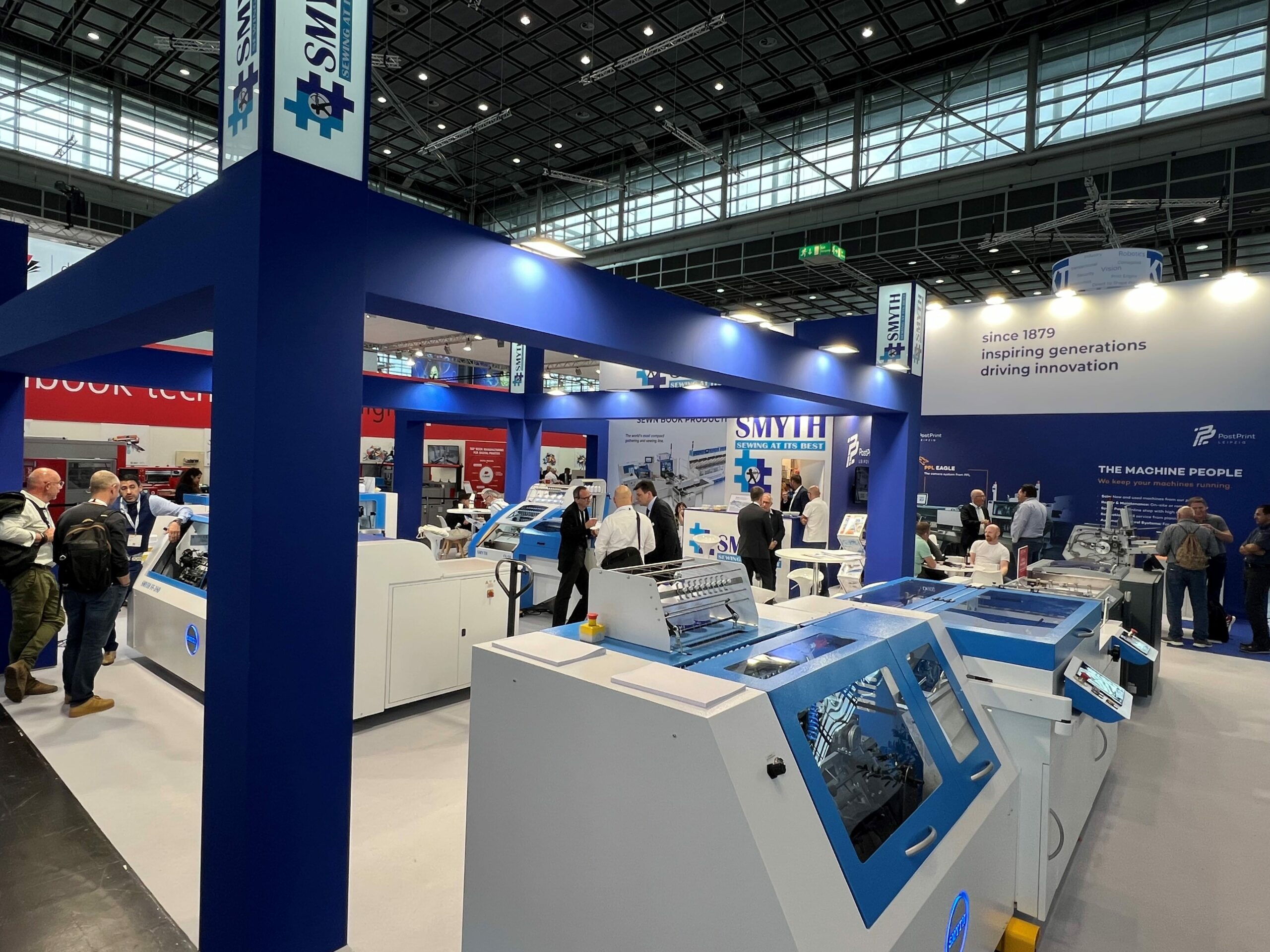
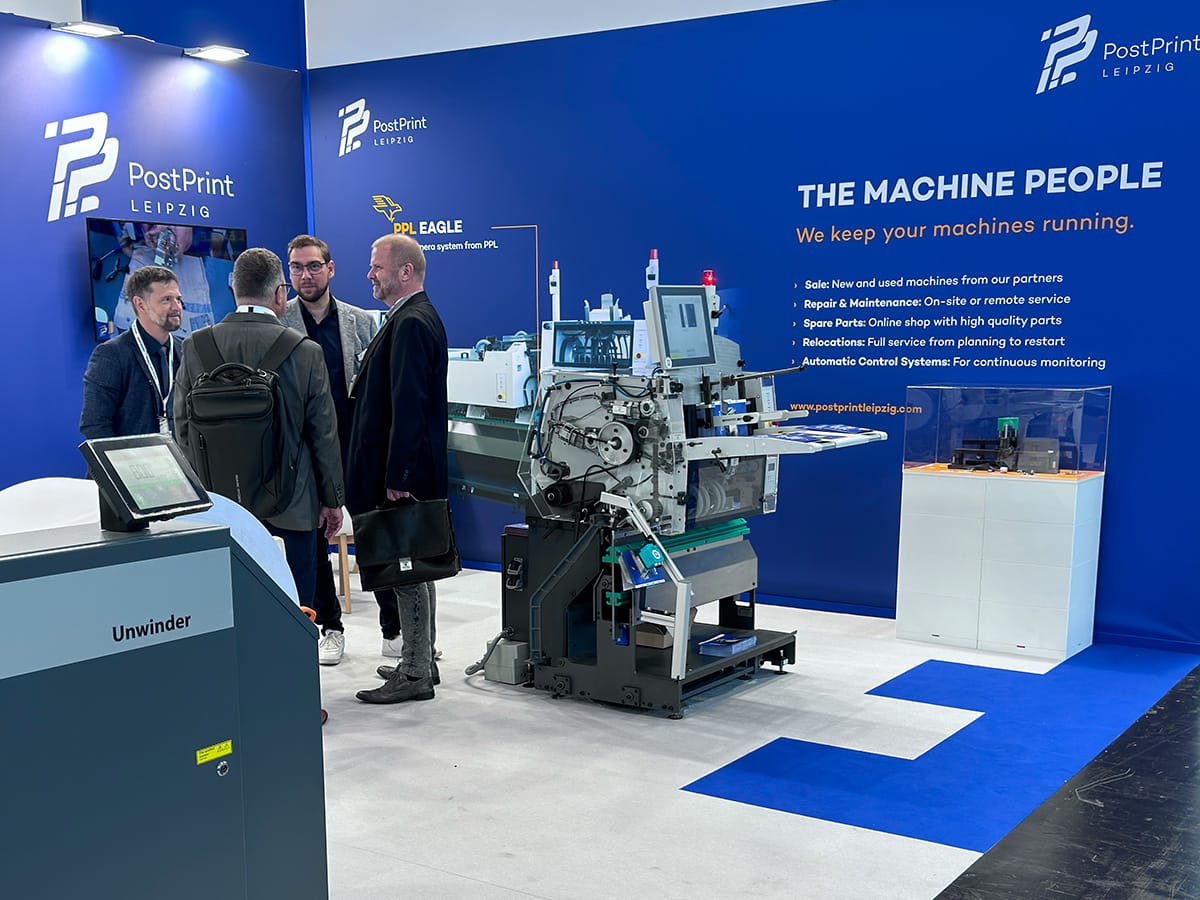
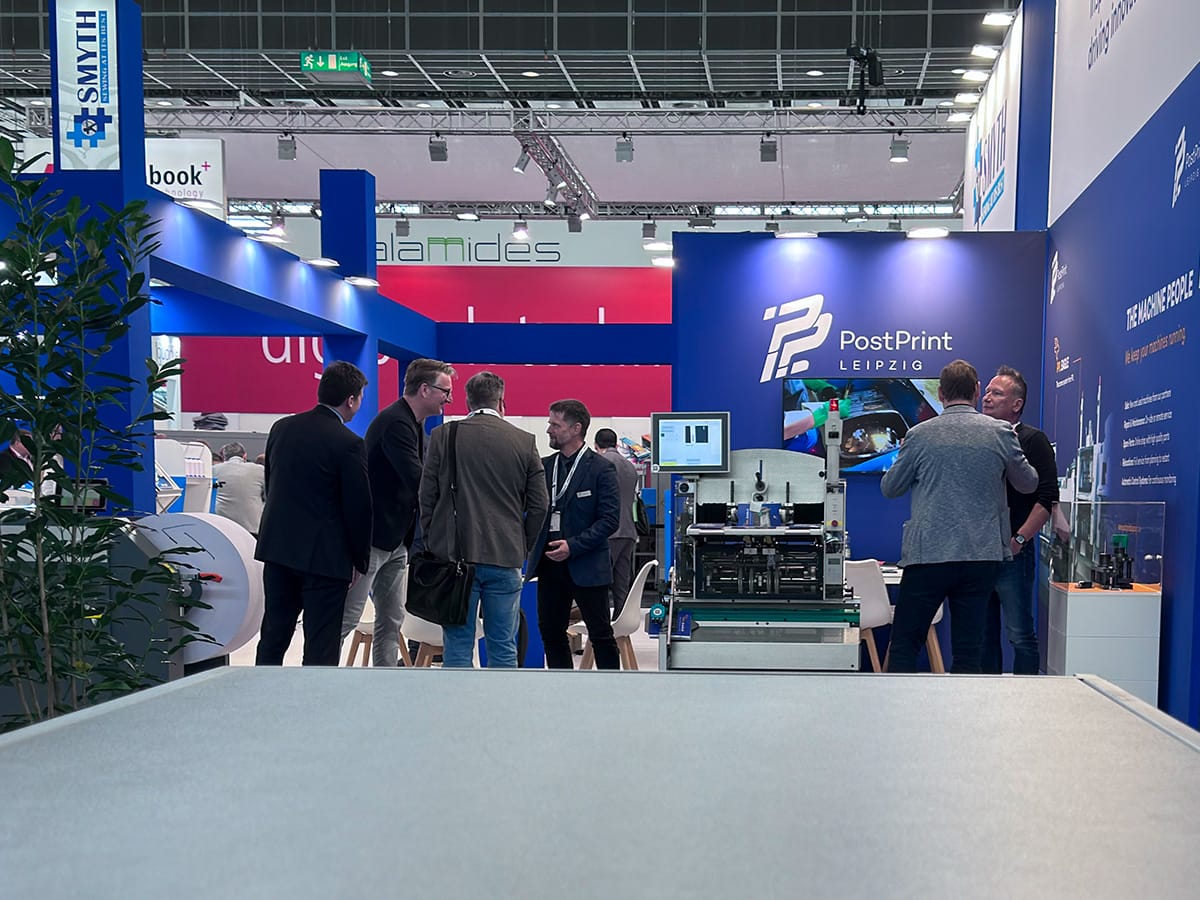
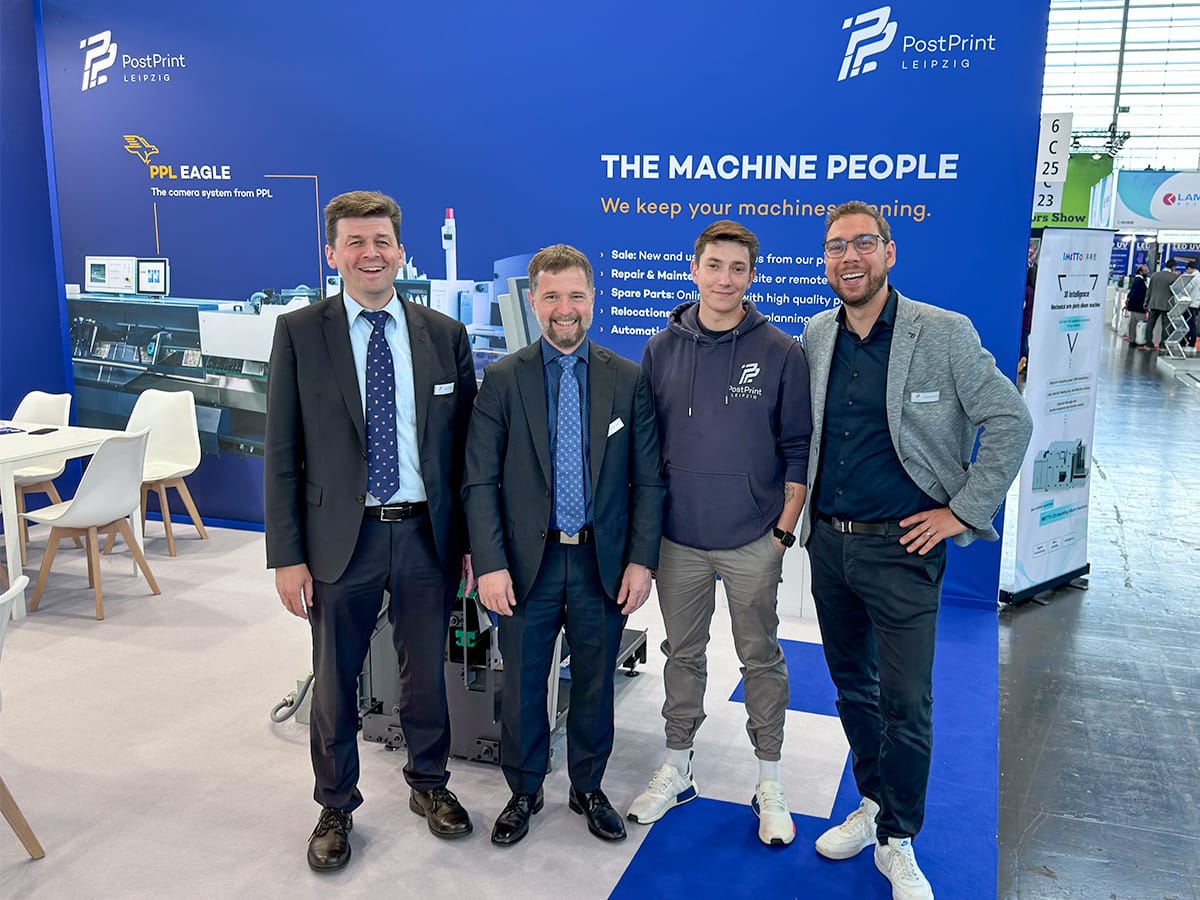
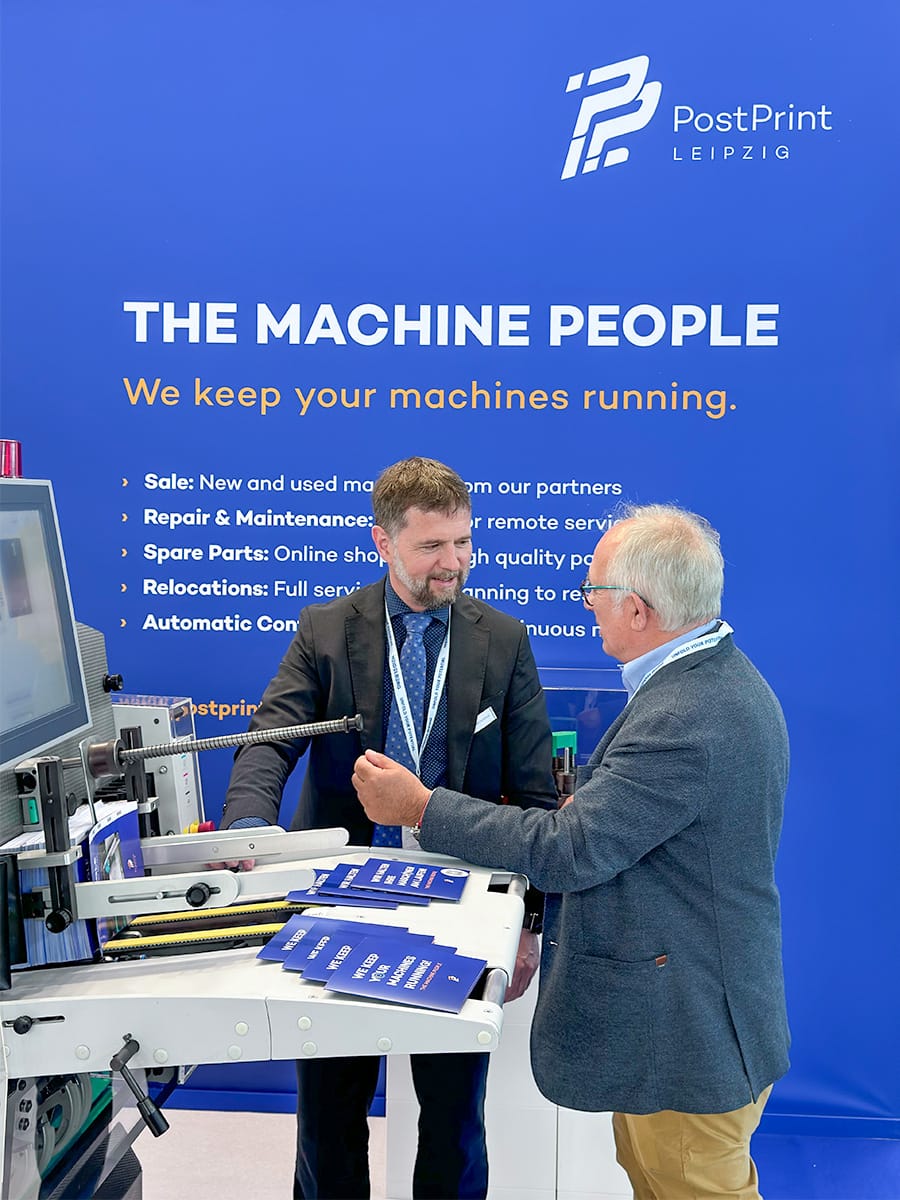
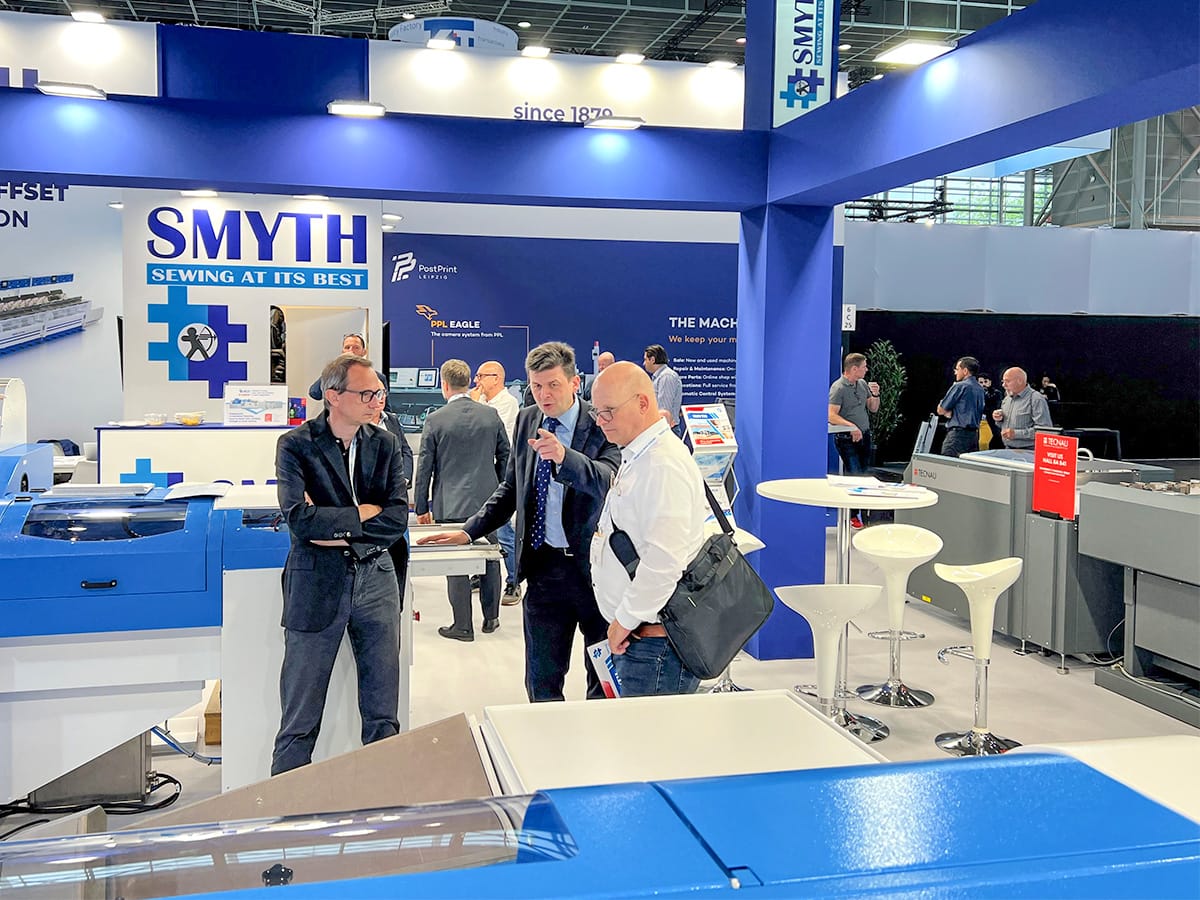
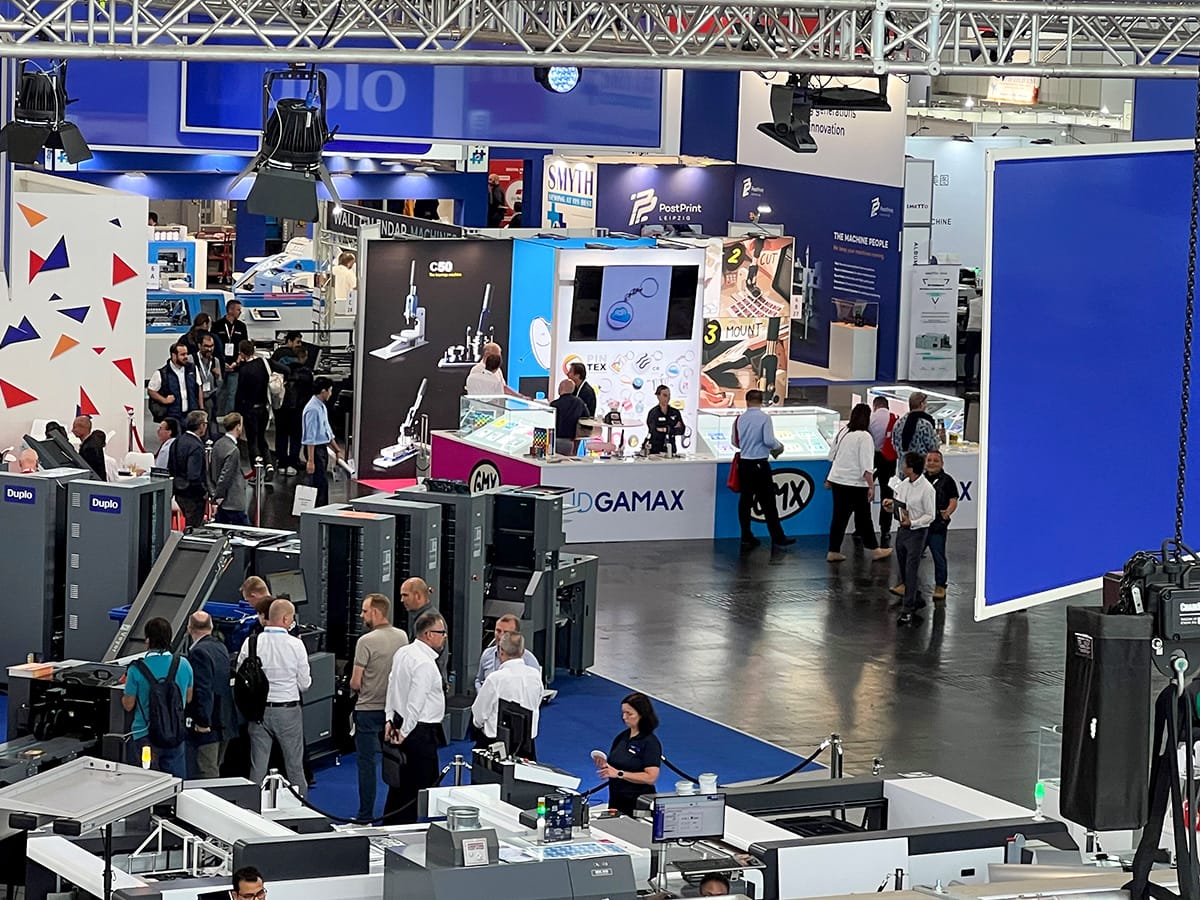
After a long hiatus, PPL was finally back at one of the most important international trade fairs for the printing industry this year – and what a success it was! Smyth proved to be the excellent partner we expected, and the concept of a joint stand was a strategically sound decision that generated a great deal of attention. Our team had productive and promising discussions and made many new contacts. While the total number of visitors, at 170,000, was lower than in some previous years (2016: 250,000), the proportion of trade visitors from Germany and abroad was significantly higher than in previous years.


Digital printing, robotics, sustainability – trends and topics at DRUPA 2024
As expected, there wasn’t one major innovation dominating DRUPA 2024. Instead, many exhibitors presented optimized solutions for all the topics that have been at the top of the industry’s agenda for years. We took the following impressions back to Leipzig.
The trend toward digital printing continues unabated. While offset printing continues to lose market share, digital printing is on its way to becoming the leading technology for book printing. With increasingly sophisticated technologies, books with a higher degree of personalization can be produced economically in small print runs or on demand. This aligns with a time when large print runs are becoming less common. It’s quite possible that offset printing will only survive in the long run in the packaging sector with its high-volume production.
Nearly all manufacturers of digital printing presses—e.g., Fuji, Canon, Konica, Minolta—presented new, high-performance machines. Another new development is that nanoprinting, once a niche technology, has finally arrived in mass production. It combines the high output of offset presses with the versatility and individualization of digital printing.
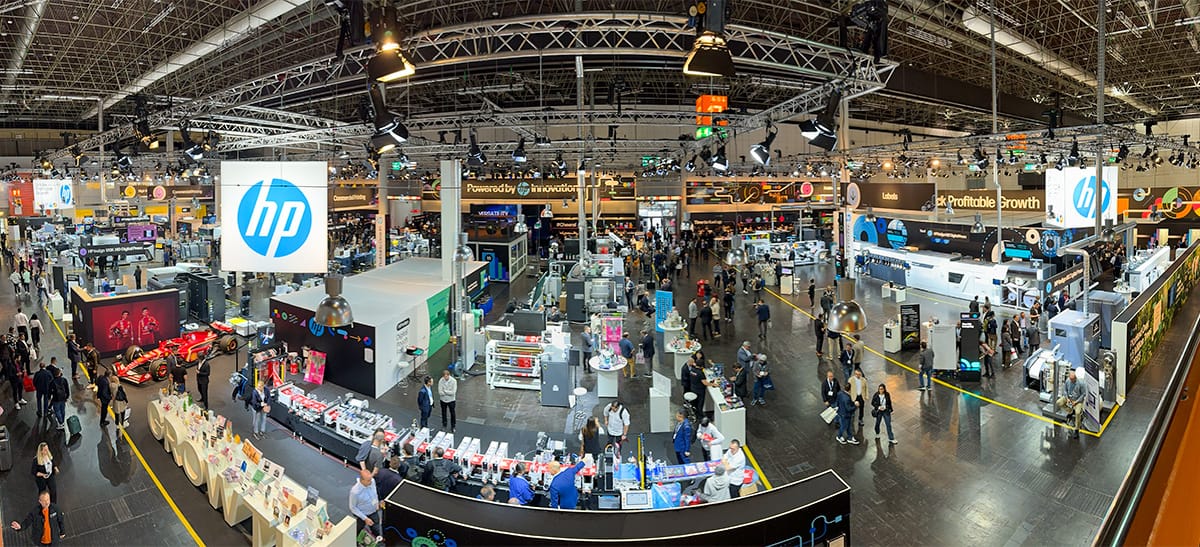
Sustainability: Although almost all exhibitors touted sustainability as a key focus, only a few innovations on the topic truly stood out. One such innovation was a digital printing press from Fuji that uses extremely little ink.
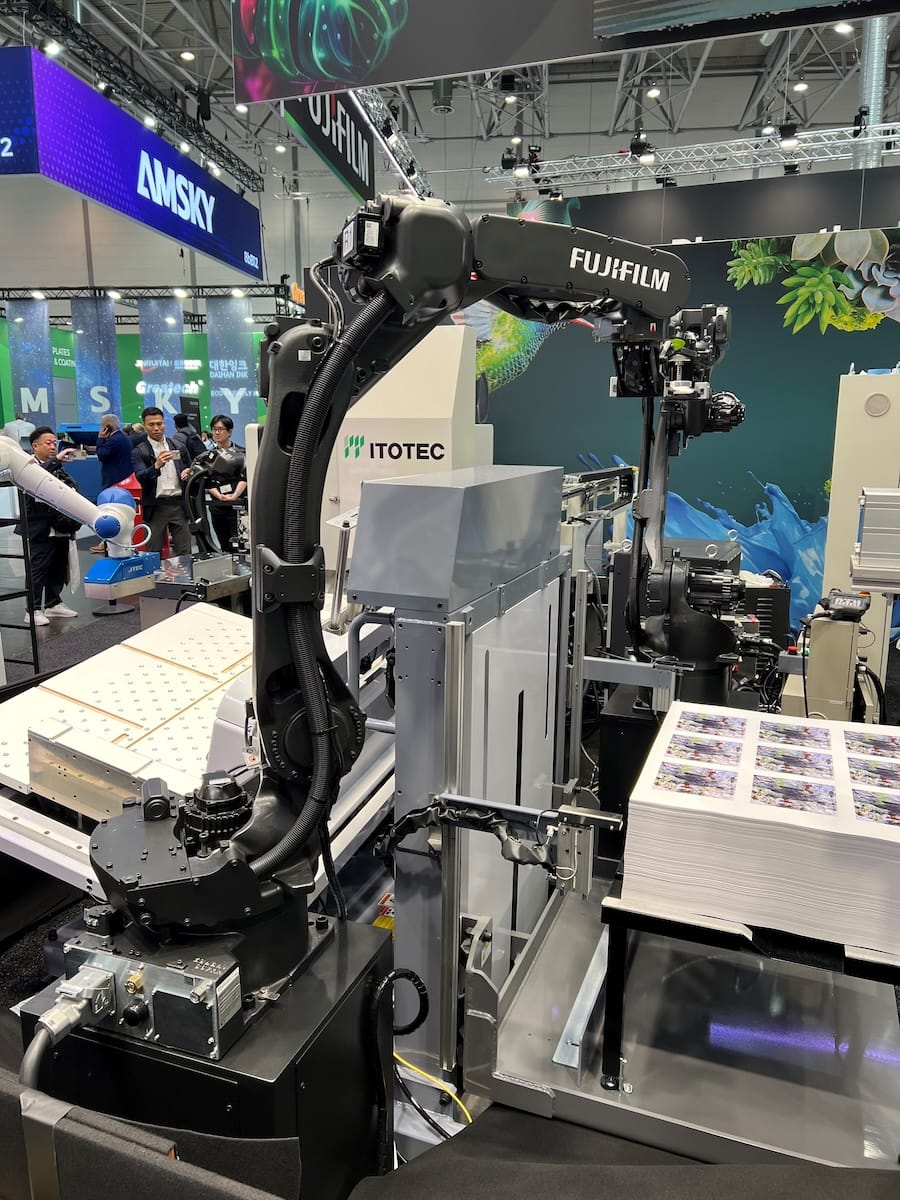
Robotics: Acceptance of increasing production automation through robots is growing. However, we are still only at the beginning of its implementation. Robots with gripper systems that move paper into and/or out of machines are the most common. Two collaborative robots from a Danish developer particularly caught our attention. They have special grippers that work together in space (fanning out paper and transferring it to a cutting machine).
Besides the high investment costs, the lack of open interfaces or overarching standards currently hinders the wider market penetration of robotics. This increases dependence on specific manufacturers or service providers.
The future belongs to integrated solutions
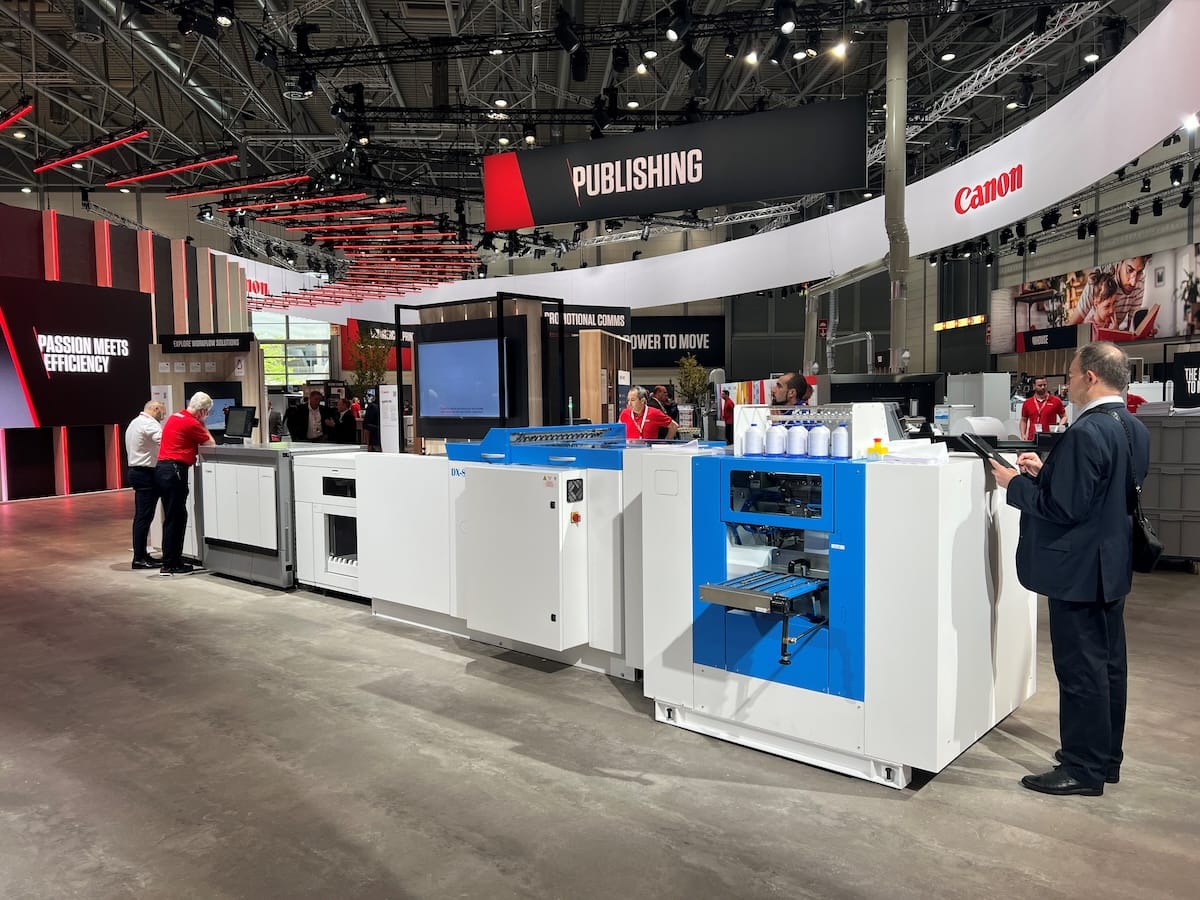
At PPL, we see the future not in automating individual production steps, but in integrated solutions. A striking example of this is a bookbinding and thread-sewing machine with an upstream printing press, jointly produced by Smyth and Canon. It combines various production steps into a single unit, steps that previously required multiple machines. In this respect, digital printing is ahead of offset printing.
Also noteworthy in this context is Smyth’s new DX-E folding and thread-sewing system for producing small and medium print runs of books. With its compact design and attractive price, it is a prime example of the latest generation of integrated solutions.